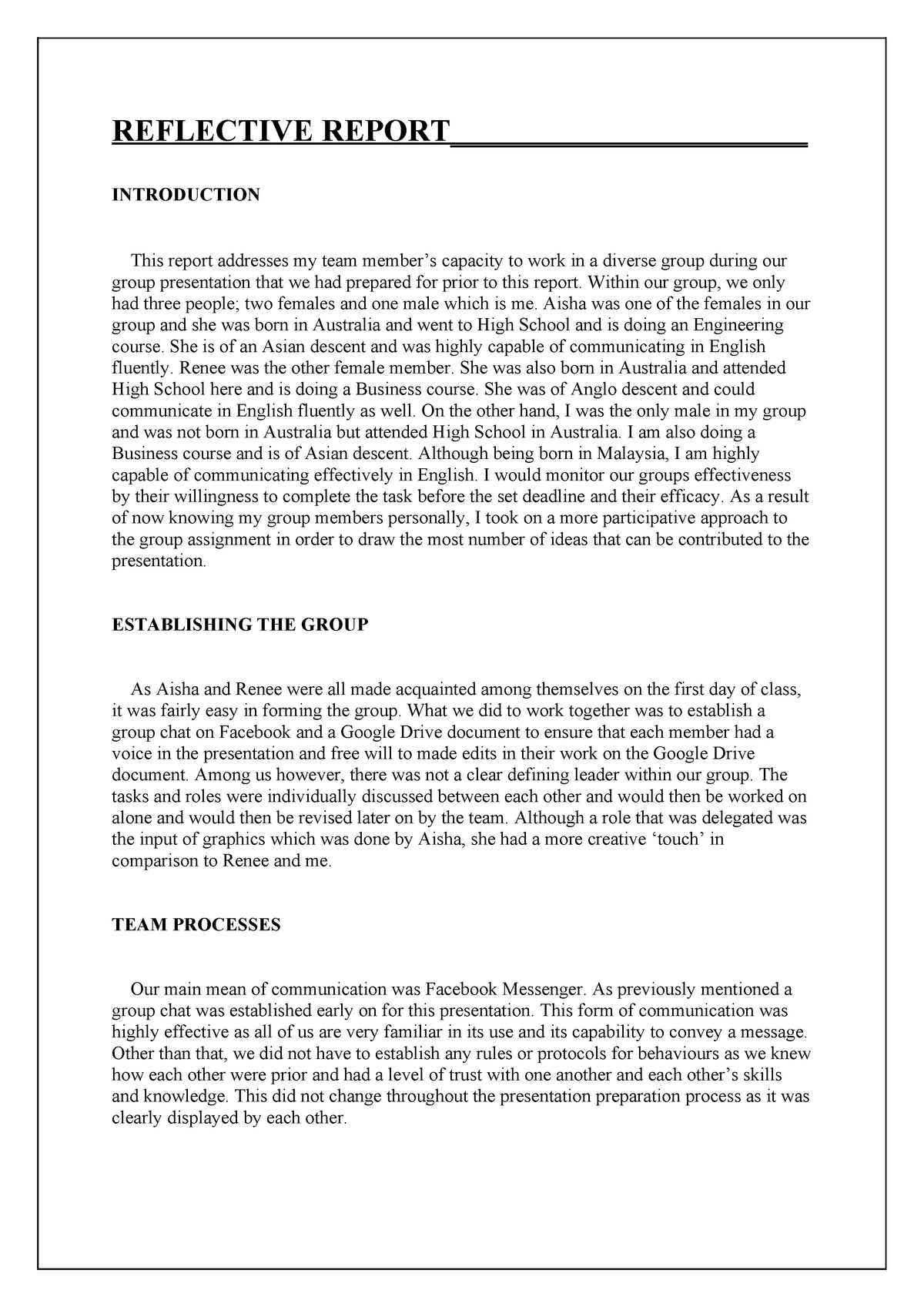
Structure of reflectivewriting The structure of a piece of reflective writing varies greatly. If you have a reflective writing task, read the instructions carefully to see if a structure is provided. A reflective essay should follow the classic essay format of introduction, body, and conclusion. Some other common The structure of reflective writing. Reflective writing can take a number of forms. Sometimes it is given as a stand-alone assessment task, for example, when you’re asked to reflect on your own learning in light of educational theory. Yet, reflective writing in Education is more commonly incorporated into other writing tasks, such as essays Reflective reports are more structured than essays. Generally, you will include more than one experience and use section headings and sub-headings. If a specific structure is prescribed by the assignment guidelines, always follow it
Guide to Writing a Reflective Essay or Report | 15 Writers
Reflective Reports are a common assignment in UK universities. Unlike traditional essays and presentations, reflective report structure, the Reflective Report gives students a chance to highlight their own experiences and opinions in an academic setting. Reflective Reports need to contain a good level of critical analysis, reflective report structure, but they can also be fun and useful for students.
While traditional academic writing discourages first-person accounts, Reflective Reports rely on them. Reflective Reports are frequently used as part of the assessment of practical projects. The reflective report is different from traditional assignments because it allows students to explore their own experiences and viewpoints. In these assignments you will not be expected to maintain impersonal objectivity; instead you are expected to highlight your reflective report structure actions, emotions, and opinions.
To be successful, students should critically evaluate their own actions reflective report structure progress, reflective report structure demonstrate an ability to link their personal experience with theoretical knowledge.
The contents of the Reflective Report will vary according to the discipline, but it typically provides an overview of the practical project and a thorough account of its progression.
Students reflective report structure highlight their own role in the project if it is a group assignment, and they should always provide critical analysis of their own achievements. In general, Reflective Reports often address the following points:.
Many students enjoy assignments that contain Reflective Reports, because they allow them to think critically about their own scholarly development and practical progress. Reflective Reports also develop a capacity for critical reflection on professional performance, reflective report structure. This is key to developing ethical practice in a wide range of fields, from business to medicine to teaching. People who have experience with Reflective Reports are better able to reflect on their day to day practice, and they also have the ability to summarise and contextualise their performance for colleagues and governing authorities.
The most common mistake in Reflective Writing is to be either too objective and scholarly, or too emotional and non-critical. Either mistake is equally wrong. Students should aim for a middle ground in their writing, in which they highlight their own personal feelings and reflections but analyse these with reference to theoretical course material. Avoid blaming others for things that went wrong. Try to maintain some level of objectivity with regard to both failures and successes.
To avoid being overly personal, emphasise the way that theories from your field could address any weaknesses that you encountered. Finally, be professional. It is true that Reflective Reports require a less formal style of writing, but students sometimes believe that this allows for illegible handwriting and poor grammar.
Remember that this is still an academic assignmentand all the normal standards of presentation apply! University of Kent, Reflective Learning Study Reflective report structure. Last Accessed 01 Oct, Ursula Lucas and Leng Tan, Developing a Reflective Capacity Within Undergraduate Education: the role of work-based placement learning. York: Higher Education Academy. Writing Services Essay Writing Assignment Writing Coursework Writing Annotated Bibliography Case Study Writing Literature Review Writing Report Writing Reflective Report Writing Research Proposal Model Answers Exam Notes.
Why choose us? Mission and Vision Samples Library Referral Programme FAQs Contact Us. Choose a Writer How We Recruit Become a Writer Apply Now Writing Vacancies How to Apply Rewards and Benefits Recruitment Process Vacancies FAQ. Manage Orders Sign Out. You may also like How to Write a Reflective Piece of Writing Reflective Writing Models Reflective Writing Reflective Essay Topics How to Write a Good Essay How to Write a Good Essay Conclusion.
Online Chat WhatsApp Messenger Email. We value your privacy. We do not sell your data and do not resell our papers.
We use cookies which you can view and control, reflective report structure.
Writing a Good Reflective Essay: from Introduction to Conclusion!
, time: 14:38How to Write 1st Class Reflective Reports

Structure of reflectivewriting The structure of a piece of reflective writing varies greatly. If you have a reflective writing task, read the instructions carefully to see if a structure is provided. A reflective essay should follow the classic essay format of introduction, body, and conclusion. Some other common Reflective reports are more structured than essays. Generally, you will include more than one experience and use section headings and sub-headings. If a specific structure is prescribed by the assignment guidelines, always follow it As the name suggests, a Reflective Report is a piece of writing that summarises a student’s critical reflection on a subject. While traditional academic writing discourages first-person accounts, Reflective Reports rely on them. Reflective Reports are frequently

No comments:
Post a Comment